




Inleiding tot PETG-blaasgieten
Wat is PETG?
PETG (Polyethyleentereftalaatglycol) is een type thermoplastisch polyester, bekend om zijn uitstekende helderheid, ...
How a Food and Beverage Blow Molding Machine Actually Works
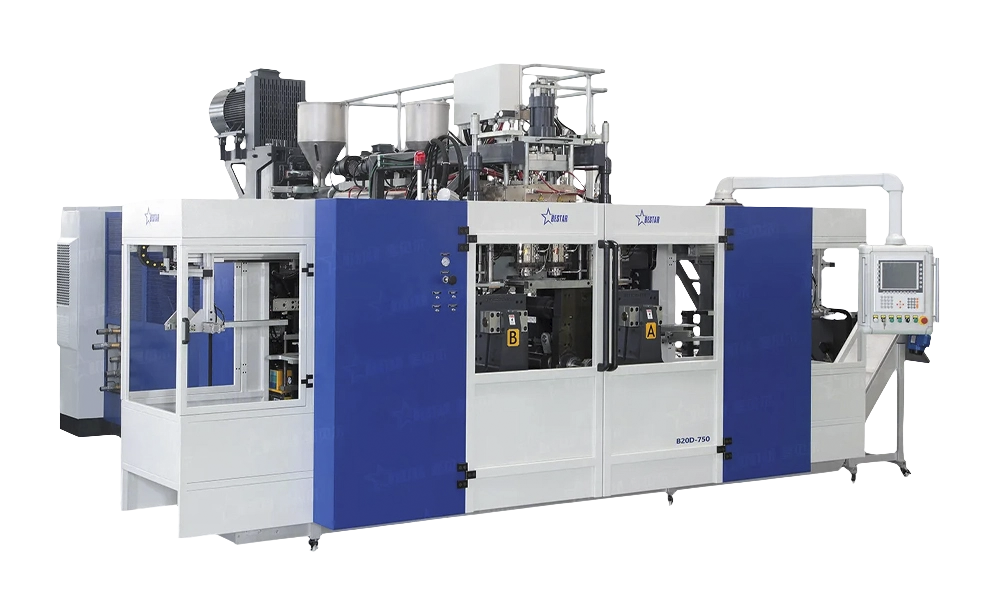
A food and beverage blow molding machine is designed to turn raw plastic resin into hollow containers such as bottles, jugs, and jars used for water, juice, dairy, sauces, and edible oils. The process begins when plastic pellets, usually PET, HDPE, or PP, are melted and formed into a preform or parison, which is a small tube-shaped piece of softened plastic. This preform is then placed inside a metal mold that carries the exact shape of the final container, including the neck finish, base design, and wall contours.
Once the preform is locked inside the mold, pressurized air is blown into it, forcing the soft plastic to expand outward until it presses against the mold walls. The mold itself is cooled, so the plastic solidifies almost instantly once it touches the metal surface. The finished bottle is then ejected, trimmed if necessary, and sent to the next stage of production, which is typically filling and capping. For food and beverage applications, every stage of this process has to meet hygiene standards, since the final container will hold something people consume directly.
Key Types of Blow Molding Machines Used in Food and Beverage Production
Not every blow molding machine works the same way, and choosing the right type depends heavily on the container shape, material, and production volume needed. Below are the three main technologies used across the food and beverage packaging industry.
Extrusion Blow Molding
Extrusion blow molding continuously pushes melted plastic through a die to form a tube, which is then captured by the mold and inflated with air. This method is commonly used for HDPE milk jugs, sauce bottles, and larger beverage containers because it handles thicker walls and irregular shapes well. It tends to be more cost-effective for high-volume, simple-shape containers but offers less precision on neck finishes compared to other methods.
Injection Blow Molding
Injection blow molding first injects molten plastic into a core rod to create a preform with a precisely shaped neck and finish, then transfers that preform to a blow station for final inflation. This approach is favored for small, high-precision containers like single-serve dairy bottles, pharmaceutical-style beverage containers, and small condiment bottles where neck thread accuracy matters for capping and sealing.
Stretch Blow Molding
Stretch blow molding is the dominant method for PET water and soda bottles. It stretches the preform both axially and radially before or during the blowing stage, which aligns the polymer chains and produces a container with strong clarity, gas barrier properties, and impact resistance. This is why nearly all carbonated beverage bottles and most bottled water containers are made using this method rather than extrusion or injection blow molding.
Comparing the Three Blow Molding Methods
| Method | Best Suited For | Typical Material | Neck Precision |
| Extrusion Blow Molding | Milk jugs, sauce bottles, large jugs | HDPE, PP | Moderate |
| Injection Blow Molding | Small dairy bottles, condiment containers | PP, PET, PS | High |
| Stretch Blow Molding | Water, soda, juice bottles | PET | High |
Material Selection for Food-Grade Containers
Choosing the correct resin is not just about cost but about food safety compliance and shelf life. PET is the most common choice for beverages because it is lightweight, transparent, and offers a reasonable barrier against oxygen and carbon dioxide loss, which matters for carbonated drinks. HDPE is preferred for dairy and opaque packaging because it provides better resistance to fats and oils while blocking UV light that can degrade product quality. PP is often chosen for hot-fill applications such as sauces or juices that need to be filled at higher temperatures without deforming the container.
Every resin used in food contact packaging must comply with regulations such as those set by the FDA in the United States or EU food contact material regulations in Europe. Manufacturers should request migration test certificates and material safety data sheets from resin suppliers before committing to large-scale production, since non-compliant materials can lead to costly recalls.
Critical Features to Evaluate Before Purchasing a Machine
Buying a blow molding machine is a long-term capital investment, so it pays to look closely at the specifications rather than just the sticker price. The following factors tend to have the biggest impact on whether a machine performs well in a food and beverage production line.
- Clamping force and mold capacity, which determine the maximum container size and wall thickness the machine can handle reliably.
- Number of cavities, since multi-cavity molds increase output per cycle but require more precise temperature control across all cavities.
- Energy consumption per cycle, because blow molding is energy-intensive and electricity costs can significantly affect long-term operating margins.
- Cycle time, which directly affects daily output and should be evaluated against your expected order volumes rather than the manufacturer's best-case number.
- Compliance certifications such as CE, food-grade contact approval, and hygiene design standards relevant to your target export markets.
- Availability of spare parts and local technical support, since downtime on a single machine can halt an entire bottling line.
Maintenance Practices That Extend Machine Lifespan
Routine maintenance is what separates a machine that runs reliably for over a decade from one that breaks down within a few years. Mold cooling channels should be inspected and cleaned regularly, since mineral buildup from cooling water reduces heat transfer efficiency and leads to longer cycle times. Hydraulic oil should be filtered or replaced according to the manufacturer's schedule, because contaminated oil is one of the leading causes of clamping system failure.
Air compressors used to supply the high-pressure blow air also need consistent monitoring, since moisture in the air lines can corrode internal valve components over time. Operators should keep a maintenance log that tracks cycle counts, part replacements, and any unusual vibration or noise, which helps identify wear patterns before they cause unplanned downtime. Many manufacturers now offer remote monitoring systems that track machine performance data in real time, allowing maintenance teams to schedule service before a failure actually occurs.
Common Production Challenges and How to Solve Them
Even well-maintained machines can run into recurring quality issues, and recognizing the cause quickly saves both material and time. Uneven wall thickness usually points to inconsistent preform heating or an imbalanced parison programming setting, which can be corrected by recalibrating the heating zones. Visible haze or cloudiness in PET bottles is often a sign that the stretch ratio was too low, meaning the preform was not stretched enough during the blowing stage to achieve proper molecular orientation.
Flash, which is excess plastic squeezed out at the mold seam, typically results from insufficient clamping force or worn mold seals, and addressing it early prevents damage to the mold surface. Base instability, where bottles do not stand upright properly, can usually be traced back to incorrect cooling time or uneven blow pressure distribution within the cavity. Keeping a record of which adjustments solved specific defects in the past creates a useful troubleshooting reference for new operators on the line.
Matching Machine Output to Real Production Needs
A frequent mistake among new beverage producers is purchasing a machine based on theoretical maximum output rather than realistic daily demand. It is more practical to calculate the actual number of bottles needed per shift, factor in downtime for mold changes and maintenance, and then select a machine with a comfortable margin above that figure rather than the highest-capacity model available. Overinvesting in capacity that will sit unused ties up capital that could otherwise go toward quality control equipment, additional mold sets, or packaging line automation that improves overall efficiency.
For businesses planning to scale gradually, modular machine designs that allow additional cavities or extended mold platens to be added later offer more flexibility than committing to a fixed maximum-capacity unit from the start. This approach lets a producer match capital spending to actual order growth rather than guessing demand years in advance.
